https://carlobughi.com/2021/01/27/1-elm-park-road-chelsea/

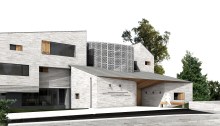
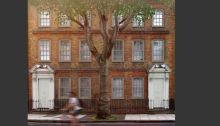
1 Elm Park Road, Chelsea | Residential development

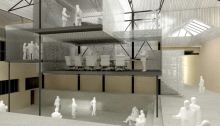
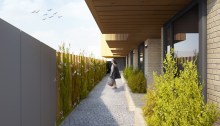
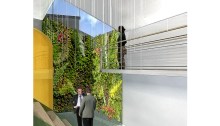
Lead Architect at Hampson and Williams, 2014-2017. High-End Residential project, Conservation Area, 1000+ sqm, 5 Storeys (2 underground), internal swimming pool, Client KHN Design, Construction cost 8M+ • Obtained planning approvals and discharge of condition whithin conservation area• Devised overall strategy for documentation and identified deliverables planned fromstage 3 to stage 5• Coordinated a multi-disciplinary…

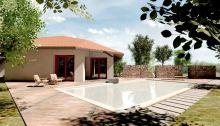
Old Mill in Cadignano, Italy | Listed building conversion | Hospitality

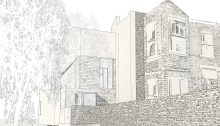
2016-2017 | Listed Building (XII Century) within Conservation Area | +700 sqm | Preliminary project for conversion into a Guest House The oldest part of the building was constructed during the 12th centu-ry and with various extensionsand alterations, continued to function as a mill until the 1960’s when Brescia Hospital –which purchased it during the…

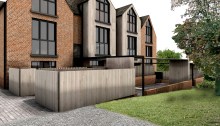
Osterley Park | Private residential

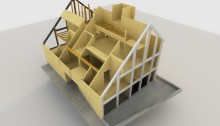
2016-2017 | Private residential | Family house | CLT construction • Increase NIA of 15% keeping same shape, footprint and mass of a previously approved scheme• Analyzed project feasibility and costs by developing a BIM model of the project at early stage• Coordinated structural information with a Cross Laminated Timber company (KLH) sharing BIM models•…

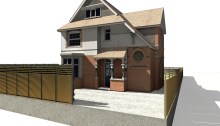
Long Lane | Listed building refurbishment | Residential development

146-148 Long Lane, London | Leads Architect and Design Manager | 2016-2017 |Listed Building Grade II* • Obtained planning approval and Listed Building consent• Devised overall strategy for documentation and deliverables planned from stage 3 to stage 5.• Coordinated a multi-disciplinary team throughout development and construction phases• Coordinated development on site with main contractor and…

Viver em Concreto | Architectural avantgarde in Sao Paulo, Brazil, between 1947-1975

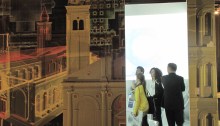
Exhibition at Restauro 2014, Ferrara, Italy, March 26th-29th 2014 | Curator: Riccardo Rubini, Denise Araujo Azevedo, DIAPReM, Dipartimento di Architettura, Università di Ferrara Scientific Committee: Marcello Balzani, Carlo Bughi   Paesaggio Urbano | Urban Design #2.2014. Viver em Concreto, by Riccardo Rubini, Denise Araújo Azevedo From the documentary research of Marlene Milan Acayaba to an Italian didactical experience. This…

Exhibition stand | Alberti’s Box at Restauro 2011

Art Director, Graphic design, Multimedia Paesaggio Urbano | Urban Design # 2.2011 In the second part of his 1860 work entitled The Civilization of the Renaissance in Italy, Jacob Burckhardt’s talks about “the state as work of art” and he proposes an understanding of Alberti which, although written a long time ago, is still very insightful. The Swiss scholar saw Leon Battista Alberti as…

https://carlobughi.com/2013/11/19/exhibition-stands-b4bricks-at-restauro-2013/

Exhibition Stands | B4Bricks at Restauro 2013

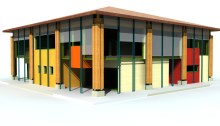
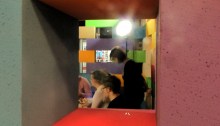
[Paesaggio Urbano |Urban Design, #5-6.2013, Maggioli Editore ] Download PDF [ 422 Kb] >> Into the bricks_Bughi Balancing Material, Colour and Light in a LEGO inspired stand for meetings, workshops and interviews at Restauro 2013  Realising a LEGO inspired stand is not probably a new idea. On the contrary, the project’s genesis is authentically original, stemming…

Exhibition Stands | Wood Wide Wall

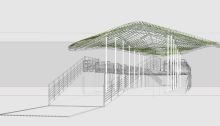
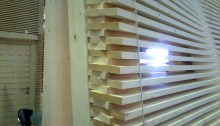
Wood Wide Wall’s design stems from another industrial product: finishes are made using plane timber profiles, ventilated facades or floors. This project uses a sole industrial profile, produced by MakHolz, with a 19×115 section, sized in only three measures. The designing principle is based on the mere boards’ juxtaposition one over the other and all…

Exhibition Stand | StoraEnso at MADE Expo, Milan, 2011

“Building’s design is becoming much more integrated: beside shapes and functions, components’ design is gaining more attention because of its impact related to optimization practices in cutting, working, transportation and installation. All these processes are well illustrated in timber buildings. This article presents two examples, two small scale projects, of the afore mentioned design and…

https://carlobughi.com/2013/11/19/qasbaum-the-concept/

Qasbaum | The concept

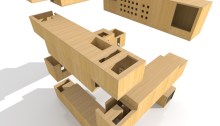
Qasbaum  is a modular building system designed for a broader concept of  contemporary living including residential, hospitality, and co-working spaces in regeneration projects. Qasbaum comes from Qasbah + baum (wood in German) because it translates the Kasbah’s main features (comfort, security, privacy) into a modular system entirely realized with XLAM technology which is common in…

Qasbaum | Human/House Life Cycle Assessment

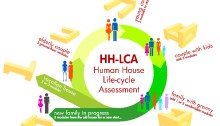
LCA, Life-cycle assessment (also known as life-cycle analysis, ecobalance, and cradle-to-grave analysis) is a technique to assess environmental impacts associated with all the stages of a product’s life from-cradle-to-grave (i.e., from raw material extraction through materials processing, manufacture, distribution, use, repair and maintenance, and disposal or recycling). [read more: wikipedia >>] Such a concept can be applied to Qasbaum’s modules, when…

Qasbaum | Living in a Box

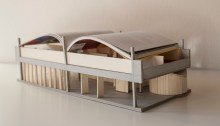
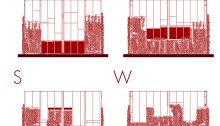
Qasbaum’s plans Today the idea of a living module is recurring and it requires to take into proper consideration industrial processes, logistic organization, the limits of the ordinary transport systems and, not at least, the living comfort. The typical architectural responses to such a challenge consist in two opposite living concepts: the single house (happily…

Qasbaum | From Kasbah to Qasbaum

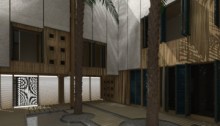
Qasbaum  originates from two well-known concepts. The first one is the “Qasbah” (or Kasbah), the typical tower house in Arabic countries that identifies those urban aggregates characterised by inner courts, narrow streets and substantially blind façades toward the external side. These mentioned Kasbah’s features are part of a strategic defensive approach in an area in which…
Qasbaum | Logistic

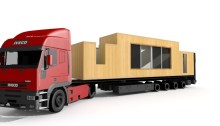
Qasbaum considers all ordinary transport conditions, unlike the US house movers. The transition between two phases implies both components first, and than modules, to be transported. XLAM panels are the most outsized elements in the “assembly kit”. To ensure a complete transportability of each element, Qasbaum avoids to use panels dimensioned like a whole wall, because a…

https://carlobughi.com/2013/11/19/qasbaum-01-key-features/

Qasbaum | Key features

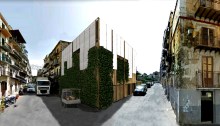
To emphasise the features of Qasbaum 01, a simulation places it in a working-class area situated in the historical centre in a Southern Italy city. Qasbaum 01 fills up an empty space, probably inherited by the Second World War bombings, now occupied by neglected warehouses. This location, potentially prestigious because it’s 300 meters from the sea, is…

Qasbaum | Dimension and space perception

The modules’ size matches those of standard containers to optimise the transport causes. In Qasbaum each module is equivalent to a living space (a bedroom, a kitchen, a living room, a study, etc). Therefore, each living space is not wider  than 2,50 meters and not longer than 12.5 meters bringing the internal spaces to a…

Qasbaum | Colours and finishing

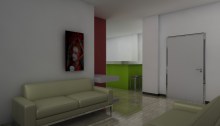
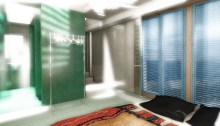
A single bedroom (Module n° 4, second level) Inner finishings are essential. The larger part of the walls are cladding-free, except where wiring and pipes need to be hidden . Colours’ lightness is generally high to enhance the natural light’s diffusion, and with cool hues, whereas saturation could be both low (in the main spaces not…